Introduction
Electricity powers almost every part of our daily lives. From the lights in our homes to the computers in our schools, children interact with electrical devices every day. Because electricity is so common, it’s easy to forget that it should always be treated with care and respect. Teaching children about electrical safety at an early age helps them develop safe habits that can protect them for life.
Children are naturally curious. They enjoy pressing buttons, plugging in devices, and asking questions about how things work. Curiosity is one of the best ways children learn, but when it comes to electricity, that curiosity should be guided with knowledge and safe habits. The goal isn’t to make children afraid of electricity. Instead, it’s to help them understand how to use it responsibly while recognizing situations that may be dangerous.
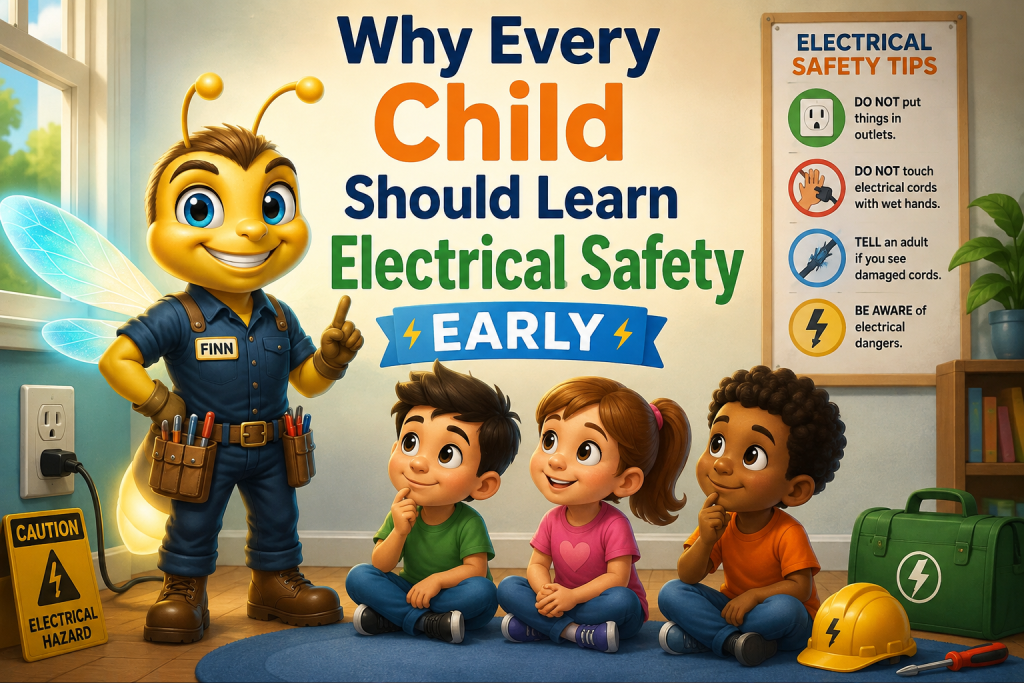
Books are one of the most effective ways to teach these important lessons. Stories make learning enjoyable while helping children remember safety rules through memorable characters and exciting adventures. Finn Firefly: The Electrical Guy introduces young readers to electrical safety in a fun and age-appropriate way, encouraging both curiosity and responsibility. All of the situations and lessons are inspired by real experiences from Mark A. Sample’s electrical career, although they are presented through imaginative storytelling that children can easily understand.
Written for children ages 3 to 13, Finn Firefly books helps families, teachers, and homeschool educators introduce electrical safety while promoting character development, STEM learning, and problem-solving skills.
Why Electrical Safety Matters for Every Child
Electricity is part of nearly everything children do each day. They switch on lights, charge tablets, watch television, play video games, and use kitchen appliances without thinking about the electricity behind them. Most of these activities are completely safe when proper precautions are followed. Problems usually happen when electricity is misunderstood or treated carelessly.
Teaching electrical safety early helps children develop habits that stay with them throughout life.
Electricity Is Everywhere
Take a walk through your home. You’ll probably see light switches, lamps, televisions, computers, chargers, ceiling fans, microwaves, and refrigerators. Children interact with many of these items every day. The more familiar they become with electrical devices, the more important it is that they understand how to use them safely.
Preventing Avoidable Accidents
Many electrical accidents can be prevented through simple knowledge. Children who understand not to place objects into outlets, touch damaged cords, or use electrical devices near water are much less likely to get hurt.
These simple lessons don’t require complicated explanations. Instead, they focus on easy-to-remember habits that children can practice every day.
Building Lifelong Safety Habits
Good habits become lifelong habits.
Children who learn to unplug devices correctly, report damaged cords, and ask adults for help whenever something seems unsafe often continue those habits into adulthood.
Teaching these routines early helps children become responsible users of electricity rather than simply telling them what not to do.
Understanding Electricity in Simple Terms
Children don’t need complicated scientific explanations to begin understanding electricity. In fact, the simplest examples are often the easiest to remember.
Electricity is a form of energy that powers many of the things we use every day. It helps turn on lights, operate computers, charge phones, cool refrigerators, and power hospitals that care for patients.
Although we usually can’t see electricity itself, we can see what it does. Helping children connect electricity to everyday life makes learning both practical and meaningful.
Respect Electricity—Don’t Fear It
Electricity is incredibly useful, but it’s also powerful.
Children should learn to respect electricity by following simple rules:
- Never touch damaged wires.
- Never place objects into electrical outlets.
- Never experiment with electrical equipment.
- Always ask an adult if something seems unusual.
These simple habits help children understand that electricity deserves respect rather than fear.
Stories like Finn Firefly: The Electrical Guy reinforce these ideas by showing Finn asking questions, thinking carefully, and learning from experienced journeymen instead of taking unnecessary risks.
Common Electrical Items Children Use Every Day
Many children don’t realize how many electrical devices they use every day.
Some common examples include:
- Light switches
- Table lamps
- Night lights
- Phone chargers
- Tablets
- Computers
- Televisions
- Gaming consoles
- Refrigerators
- Microwaves
- Ceiling fans
Recognizing these everyday items helps children understand that electricity surrounds them at home, in school, and almost everywhere they go.
Parents can use these everyday objects as opportunities to teach safe habits while encouraging children to ask thoughtful questions about how electricity works.
Essential Electrical Safety Rules Every Child Should Know
Teaching electrical safety doesn’t need to be difficult. A few simple rules can help children stay safe while building confidence around electrical devices.
Never Touch Electrical Outlets
Electrical outlets should never be used as toys. Children should never place fingers, pencils, keys, or other objects inside outlets.
Parents can install outlet covers for younger children and teach a simple rule:
“If it goes in the outlet, ask an adult first.”
Keep Water Away from Electricity
One of the easiest safety rules for children to remember is that water and electricity never mix.
Children should avoid:
- Plugging in chargers with wet hands.
- Using electrical devices near sinks or bathtubs.
- Touching electrical appliances while standing in water.
Never Pull Electrical Cords
Instead of pulling cords, children should learn to hold the plug when unplugging a device—and only with adult permission.
This habit protects both the device and the electrical cord.
Stay Away from Damaged Wires
Broken cords, cracked plugs, and exposed wires should never be touched.
If children notice damaged electrical equipment, they should immediately tell a trusted adult.
Stay Away from Utility Poles and Substations
Utility poles and electrical substations may look interesting, but they contain dangerous high-voltage electricity.
Children should understand that only trained electrical professionals should work near this equipment.
Tell an Adult If Something Looks Unsafe
One of the most valuable safety lessons children can learn is knowing when to ask for help.
If they notice:
- Sparks from an outlet
- Smoke from an appliance
- A damaged cord
- A fallen power line
- A burning smell
they should move away and tell a trusted adult immediately.
These simple rules encourage observation, responsibility, and safe decision-making while helping children build confidence instead of fear.
Why Stories Are One of the Best Ways to Teach Electrical Safety
Children often remember stories much longer than they remember lists of rules.
A memorable adventure helps young readers connect emotionally with a character. As they follow Finn’s journey, they experience his challenges, celebrate his successes, and learn important safety lessons alongside him.
Instead of simply memorizing electrical safety rules, children understand why those rules matter.
Stories also encourage meaningful conversations between parents, teachers, and children. Questions like:
- Why did Finn ask for help?
- What safety rule protected him?
- What would you have done?
help children apply these lessons to real-life situations.
Because Finn Firefly: The Electrical Guy is inspired by real experiences from Mark A. Sample’s electrical career while presented through imaginative storytelling, the lessons feel authentic without becoming overwhelming for young readers.
How Finn Firefly Teaches Electrical Safety
One of the reasons Finn Firefly: The Electrical Guy stands out is that electrical safety is naturally woven into every adventure rather than presented as a list of rules. Instead of overwhelming children with technical information, the stories introduce safety concepts through exciting situations that encourage curiosity, responsibility, and good decision-making.
Unlike many educational books, all of the situations and lessons are inspired by real experiences from Mark A. Sample’s electrical career, although they are presented through imaginative storytelling that children can easily understand. This unique approach makes every lesson feel authentic while keeping young readers entertained.
Throughout the series, Finn is a curious apprentice who understands that learning takes time. He doesn’t rush into dangerous situations or pretend to know everything. Instead, he asks questions, listens carefully, and learns from experienced journeymen who patiently explain why safety always comes first. This teaches children that asking for guidance is a sign of wisdom and that learning from experienced professionals is an important part of growing.
Finn also learns that every successful electrician respects electricity. Whether he’s working with tools, observing electrical systems, or solving everyday problems, he understands that following safety procedures protects not only himself but also everyone around him. These adventures encourage responsibility, careful thinking, and problem-solving skills that children can apply both at home and in school.
By combining exciting storytelling with meaningful safety lessons, Finn Firefly introduces children to electrical safety in an engaging, age-appropriate way while encouraging curiosity, confidence, and lifelong learning.
Fun Ways Parents Can Teach Electrical Safety
Parents are a child’s first teachers, and many lifelong habits begin at home. Fortunately, teaching electrical safety doesn’t require complicated lessons. Small conversations and fun activities often make the biggest impact.
Read Together
Reading books like Finn Firefly: The Electrical Guy provides an easy way to introduce electrical safety through stories children enjoy. After each chapter, parents can discuss the lesson and ask questions about the choices Finn made.
Explore Your Home
Ask questions like:
Turn your home into a learning activity by identifying everyday electrical items together.
- Which things use electricity?
- Which ones should only adults use?
- What should we do if we find a damaged cord?
These simple activities help children recognize electrical equipment while reinforcing safe habits.
Make Learning Fun
Games can make safety lessons memorable. Parents can create activities such as:
- Safe or Unsafe?
- Spot the Electrical Hazard
- Electrical Safety Bingo
- Safety Treasure Hunts
Children often remember games much longer than lectures.
Practice Safe Habits Every Day
Encourage children to:
- Turn off lights when leaving a room.
- Keep chargers organized.
- Never pull electrical cords.
- Report damaged equipment.
- Ask before plugging something into an outlet.
Repeating these habits regularly helps them become second nature.
How Teachers Can Make Electrical Safety Fun
Schools are excellent places to introduce electrical safety because students enjoy learning together. Teachers can combine science, reading, and classroom discussions to create engaging learning experiences.
Classroom Discussions
Begin by asking simple questions such as:
- What is electricity?
- Why is it useful?
- Why should we respect it?
- What electrical devices do we use every day?
These conversations encourage students to connect electrical safety with everyday life.
Creative Activities
Teachers can reinforce learning through:
- Safety poster contests
- Coloring activities
- Role-playing different safety situations
- STEM projects
- Guest speakers such as licensed electricians
These activities help children remember important lessons while making learning interactive and enjoyable.
Why Electrical Safety Supports STEM Learning
Electrical safety naturally fits into STEM education because science, technology, engineering, and mathematics all require responsible decision-making.
As children learn how electricity works, they also begin developing observation skills, critical thinking, and problem-solving abilities. Stories like Finn Firefly encourage children to ask questions, think carefully before acting, and understand that safety is an important part of every STEM career.
Children also discover that electricians, engineers, scientists, and technicians all depend on responsibility, teamwork, and careful planning. These lessons help introduce future career possibilities while encouraging curiosity about how the world works.
Helping Children Build Safe Habits for Life
Teaching electrical safety isn’t something that happens only once. The strongest habits develop through regular practice and consistent reminders.
Parents and teachers can reinforce these lessons by:
- Setting a good example.
- Encouraging children to ask questions.
- Practicing safe habits every day.
- Recognizing responsible behavior.
- Reviewing safety rules regularly.
- Making learning enjoyable.
As children grow, they’ll encounter new electrical devices and technologies. The ability to think carefully, recognize hazards, and make responsible decisions will continue protecting them throughout their lives.
Conclusion
Electrical safety is one of the most valuable life skills children can learn. Because electricity powers so much of everyday life, understanding how to use it safely helps children build confidence, make responsible decisions, and develop habits that can protect them for years to come.
Stories make these lessons easier to understand and remember. Instead of relying on rules alone, Finn Firefly: The Electrical Guy introduces children to electrical safety through engaging adventures, relatable characters, and practical examples. Inspired by real experiences from Mark A. Sample’s electrical career, every story teaches children that curiosity should always be guided by knowledge, responsibility, and safe decision-making.
Whether you’re a parent, teacher, librarian, or homeschool educator, Finn Firefly provides an engaging introduction to electrical safety for children ages 3 to 13. Along the way, young readers also develop perseverance, teamwork, critical thinking, and respect for skilled trades.
Visit www.finnfireflytheelectricalguy.com or your preferred major online book retailer to discover Finn Firefly: The Electrical Guy and help children build the confidence, curiosity, and safety habits that will benefit them for a lifetime.