Introduction
One of the greatest gifts we can give a child isn’t a toy or the latest gadget it’s the ability to become a responsible person. Responsibility helps children make good choices, keep promises, respect others, and learn from their mistakes. These qualities don’t appear overnight. They develop through everyday experiences, positive role models, and meaningful stories that encourage children to think about their actions.
That’s why books play such an important role in childhood development. Long after children forget a lecture, they often remember a story. When they connect with a character, they experience that character’s successes, failures, and lessons. Instead of simply hearing, “Be responsible,” they watch responsibility in action and understand why it matters.
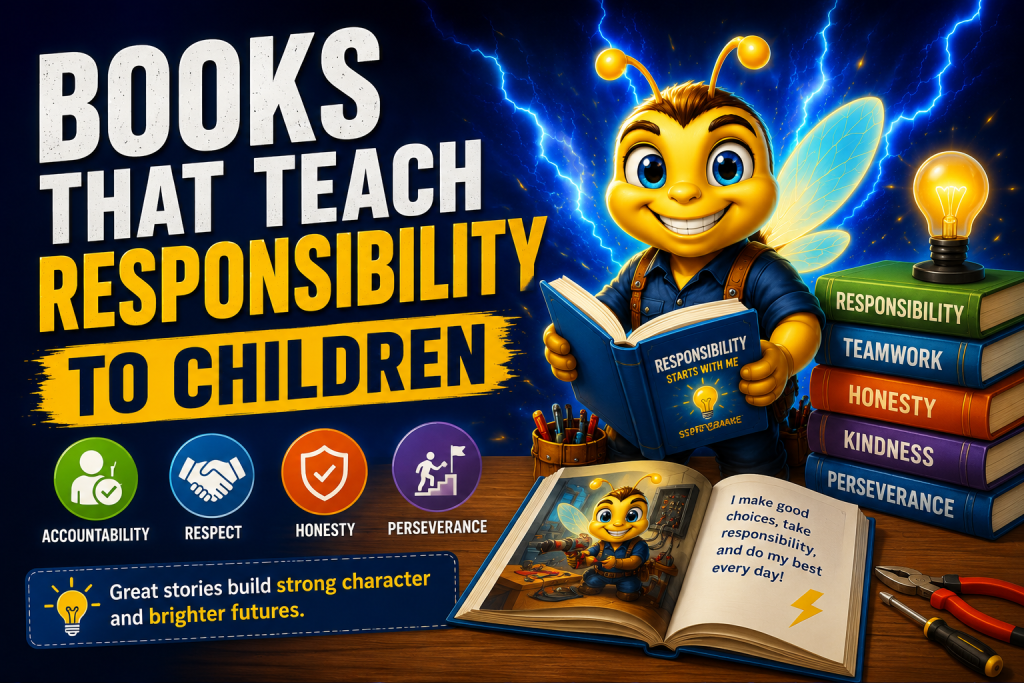
One book that beautifully teaches these values is Finn Firefly: The Electrical Guy by Mark A. Sample. Unlike many fictional stories, the adventures of Finn are inspired by real experiences from Mark’s 36-year electrical career, although they are presented through imaginative storytelling that children can easily understand. Every adventure teaches responsibility, teamwork, perseverance, honesty, and problem-solving in a fun and engaging way.
Designed for children ages 3 to 13, Finn Firefly helps young readers develop character while introducing them to the exciting world of skilled trades. Whether you’re a parent, teacher, librarian, or homeschool educator, choosing books that encourage responsibility is one of the best investments you can make in a child’s future.
Why Responsibility Is an Essential Life Skill
Responsibility is much more than completing chores or cleaning a bedroom. It teaches children that their choices affect both themselves and the people around them. Responsible children learn to keep promises, admit mistakes, respect others, and continue doing their best even when something feels difficult.
These habits become valuable throughout life. They help children succeed in school, build stronger friendships, and prepare for future careers. Developing responsibility at an early age also gives children the confidence to handle new challenges with maturity and independence.
Responsibility Builds Independence
Every small responsibility gives children confidence in their abilities. Packing a backpack, feeding a pet, or completing homework teaches them that their actions matter. As they complete these everyday tasks, they become more independent and begin trusting themselves.
Responsibility Encourages Better Decisions
Children face choices every day. Should they tell the truth? Help someone? Finish homework before playing?
Books allow children to watch characters make these decisions and experience the results. This helps young readers understand the importance of making thoughtful choices before facing similar situations themselves.
Responsibility Teaches Accountability
Everyone makes mistakes, including children. The important lesson is learning how to accept responsibility instead of blaming others. Responsible children understand that mistakes are opportunities to learn, improve, and make better decisions next time.
Why Stories Teach Responsibility So Well
Stories have a unique ability to teach life lessons because they create emotional connections. Children celebrate a character’s successes and feel disappointed when that character makes poor decisions. These emotions help lessons stay with them much longer than simple instructions.
Imagine telling a child to “always be responsible.” Now imagine showing that lesson through a character who forgets an important task, learns from the experience, and becomes more dependable. Most children remember the story because they experienced the lesson alongside the character.
Stories also encourage meaningful conversations between adults and children. Parents and teachers can ask questions such as:
- What responsibility did the character have?
- Why was honesty important?
- What would you have done differently?
- What lesson can you use in your own life?
These discussions help children apply what they read to everyday situations.
Qualities Responsible Children Develop
Responsibility isn’t a single skill. It’s a collection of habits that grow over time. Good children’s books help young readers develop qualities that benefit them throughout life.
Accountability
Responsible children understand that every action has consequences. Instead of making excuses, they learn to admit mistakes, apologize when necessary, and work toward better choices.
Honesty
Honesty builds trust. Children who learn to tell the truth—even when it’s difficult—develop stronger relationships with family, teachers, and friends.
Respect
Respect means treating people kindly, following rules, and appreciating the efforts of others. It also includes caring for belongings and helping those around us.
Self-Discipline
Responsibility often means doing the right thing without being reminded. Whether it’s finishing homework, cleaning up after playtime, or completing household chores, self-discipline prepares children for future success.
Kindness and Dependability
Responsible children become dependable because people know they will keep their promises. They also understand that responsibility includes helping others, encouraging friends, and showing compassion whenever possible.
Confidence
As children complete responsibilities successfully, they naturally become more confident. Confidence built through hard work and responsibility lasts much longer than confidence built through praise alone.
Best Books That Teach Responsibility
Many excellent children’s books teach responsibility in different ways. Some focus on honesty, while others emphasize kindness, perseverance, teamwork, or making good decisions.
Among the best is Finn Firefly: The Electrical Guy.
Finn is a young apprentice electrician who learns that success requires listening carefully, working hard, helping others, and learning from mistakes. Throughout every adventure, he accepts responsibility for his actions instead of making excuses. Young readers also discover the importance of teamwork, honesty, perseverance, and problem-solving while exploring the fascinating world of skilled trades.
Other excellent responsibility books include:
- The Berenstain Bears Series
- What Should Danny Do?
- The Little Engine That Could
- Horton Hatches the Egg
- Have You Filled a Bucket Today?
- Enemy Pie
- Officer Buckle and Gloria
- Miss Rumphius
- Wonder
Each of these books helps children understand that responsibility is built through everyday choices and thoughtful actions.
How Finn Firefly Teaches Responsibility
What makes Finn Firefly unique is that responsibility develops naturally throughout every adventure.
Finn isn’t perfect.
He asks questions.
He makes mistakes.
He learns from experienced journeymen.
Most importantly, he never gives up.
As an apprentice electrician, Finn discovers that every task deserves careful attention. He learns to listen before acting, solve problems thoughtfully, and take pride in doing quality work. Whenever challenges arise, he accepts responsibility instead of blaming others.
These adventures also remind children that responsibility extends beyond work. It includes helping friends, respecting parents and teachers, encouraging teammates, and showing kindness every day.
Because the stories are inspired by real experiences from Mark A. Sample’s electrical career, they feel authentic while remaining imaginative and enjoyable for young readers. Every lesson reflects practical values children can apply at home, in school, and throughout life.
Practical Ways Parents Can Teach Responsibility Through Reading
Teaching responsibility doesn’t require long lectures. In fact, some of the most valuable lessons happen during everyday reading time. Stories allow children to see characters make choices, face challenges, and grow from their experiences in a way that feels natural and enjoyable. When parents actively discuss these stories, children begin connecting the lessons to their own lives.
Ask Thought-Provoking Questions
After reading a chapter, spend a few minutes talking about the story. Questions encourage children to think beyond the plot and reflect on the character’s decisions. You can ask:
- What responsibility did Finn have?
- Did he make the right choice?
- What would you have done differently?
- How did honesty help solve the problem?
- What lesson can you use in your own life?
These simple conversations help children develop critical thinking while reinforcing positive values.
Connect Stories to Everyday Life
Children learn best when they can apply a lesson immediately. After reading about Finn completing an important task, encourage your child to take responsibility at home by:
- Making their bed
- Feeding a family pet
- Organizing school supplies
- Helping prepare dinner
- Cleaning up toys
These small responsibilities teach children that every action matters.
Praise Responsible Behavior
Positive encouragement goes a long way. When children complete a task without reminders or admit a mistake honestly, recognize their effort. Praising responsible choices motivates children to continue building good habits.
Be a Positive Role Model
Children often learn more from what adults do than from what they say. Keeping promises, admitting mistakes, and treating others with kindness demonstrate responsibility in everyday life. These examples leave a lasting impression on young minds.
How Teachers Can Use Responsibility Books in the Classroom
Responsibility themed books are valuable classroom resources because they support both literacy and character development. Stories like Finn Firefly: The Electrical Guy encourage meaningful discussions while helping students understand important life skills.
Reading Groups
Small reading groups allow students to discuss characters, identify important lessons, and share personal experiences. These conversations improve reading comprehension while teaching empathy and communication.
Character Education
Teachers can use Finn Firefly to introduce topics such as:
- Honesty
- Respect
- Teamwork
- Kindness
- Accountability
- Perseverance
Students quickly see how these qualities contribute to success both inside and outside the classroom.
Writing Activities
After reading a story, students can write about:
- A time they acted responsibly.
- A mistake they learned from.
- Someone they admire for being dependable.
- Ways they can become more responsible.
These activities strengthen writing skills while encouraging self-reflection.
Role-Playing and Group Discussions
Role-playing allows students to practice responsible decision-making in a safe environment. Group discussions also encourage respectful listening and thoughtful conversations about the importance of making good choices.
Why Responsibility and STEM Learning Go Hand in Hand
Many people think responsibility and STEM education are unrelated, but they work together every day. Scientists, engineers, electricians, healthcare professionals, and technicians all rely on responsibility to perform their jobs safely and effectively.
Following instructions, solving problems, working as a team, and paying attention to detail are essential skills in every STEM career. Through Finn’s adventures, children discover that curiosity, careful thinking, and perseverance are just as important as technical knowledge.
Instead of presenting science through complicated explanations, Finn Firefly books introduces STEM concepts through engaging adventures inspired by real experiences from Mark A. Sample’s electrical career, presented through imaginative storytelling. This approach makes learning exciting while encouraging children to explore how the world works.
Choosing the Right Responsibility Book
Not every children’s book teaches the same lessons. When choosing books that focus on responsibility, look for stories that combine engaging adventures with meaningful character development.
A good responsibility-focused book should include:
- Age-appropriate language
- Positive role models
- Relatable characters
- Practical life lessons
- Engaging illustrations
- Opportunities for discussion
- Encouraging messages
Families looking for books that inspire both learning and character development will appreciate stories that teach honesty, teamwork, perseverance, and responsibility in a natural way.
Finn Firefly: The Electrical Guy stands out because it blends exciting storytelling with authentic life lessons that children can apply both at home and in school.
Conclusion
Responsibility is one of the most valuable qualities a child can develop. It teaches children to be honest, dependable, respectful, and confident while preparing them for future challenges. The best way to introduce these values is through stories that children genuinely enjoy.
Finn Firefly: The Electrical Guy does exactly that. Inspired by real experiences from Mark A. Sample’s electrical career, the series transforms everyday lessons into imaginative adventures that encourage children to work hard, learn from mistakes, ask questions, and treat others with kindness. By replacing lectures with engaging storytelling, the books help young readers understand that responsibility isn’t about being perfect it’s about making good choices and continuing to grow.
Whether you’re a parent building a home library, a teacher looking for meaningful classroom resources, or a homeschool family searching for educational stories, Finn Firefly offers an engaging reading experience for children ages 3 to 13. Through memorable adventures, relatable characters, and timeless life lessons, the series inspires young readers to become curious learners, responsible problem-solvers, and compassionate individuals.
Visit www.finnfireflytheelectricalguy.com or your favorite major online book retailer to discover Finn Firefly: The Electrical Guy and begin a journey where imagination, responsibility, and lifelong learning come together.